Peptide Pureness Guide 98%, 99% & Research-grade Discussed Prg
What Hplc Can Not Confirm Alone
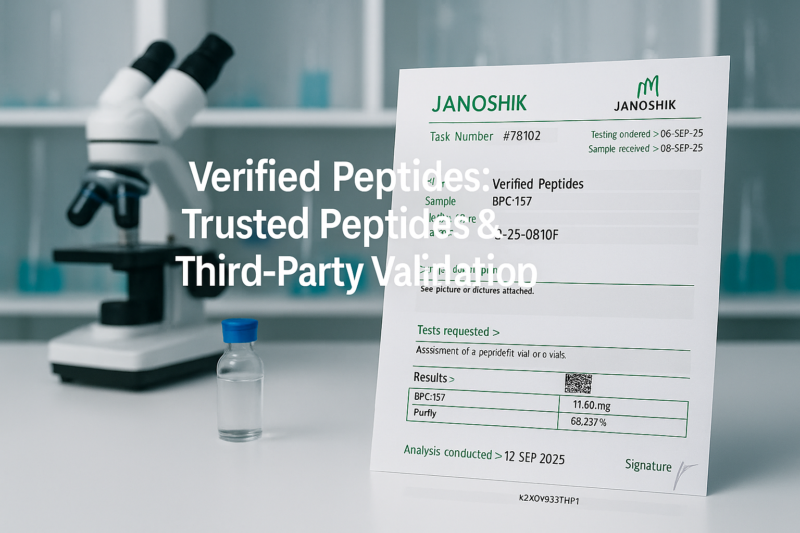
In vivo examinations review absorption, distribution, metabolic rate, and excretion (ADME) attributes, even more verifying efficiency and safety and security. These screening services not only help customers optimize items exactly throughout growth however also provide solid information support for governing compliance of peptide formulations. Be cautious of COAs that offer a purity number without any sustaining chromatographic information, report purity without specifying the analytical method, or listing a molecular weight without mass spectrometry verification. Tandem mass spectrometry (MS/MS or MS ²) fragments the peptide ions in the gas phase and analyses the piece masses. Biotechnology This is the gold criterion for peptide identity-- it confirms both the make-up and the series. For numerous peptide tasks, absolute peptide quantity matters as much as chromatographic pureness.- We give peptide identity confirmation using mass-based methods picked for the example and logical purpose.These peptides come with a standard quality assurance bundle, generally including HPLC pureness analysis and MS confirmation of identity, guaranteeing they meet scientific criteria for purity and structure.Notably, pureness percents describe chemical make-up just-- they do not indicate sterility or biological viability.Starting with appropriate lab recognition is consequently a vital part of a scientist's quality assurance process." Mass spectrometry answers "is the discovered substance regular with the desired peptide identification?

Apex Laboratory Editorial Team
The liquified peptide sample is infused into a stream of fluid solvent (the mobile stage) that moves with a tube loaded with small bits (the fixed stage). Various molecules "stick" to those fragments with different strengths, so they travel via the column at various rates. Subtle distinctions in basic material purity and structure can lead to disparities in the task of the end product.
" Mass spectrometry responses "is the spotted compound regular with the intended peptide identification? " With each other they supply stronger batch-level evidence than either technique alone. In the usual peptide COA context, height purity typically refers to the portion of total chromatogram location stood for by the main peptide optimal.What Do Pureness Levels 95%, 98%, 99% Mean?
It's feasible Trusted Peptide Vendor to have a peptide that is, say, 95% pure by HPLC and yet the internet peptide web content is something like 70% of the powder's weight (the rest being water and salts). Don't be startled-- this is normal and is usually determined by different evaluations (like amino acid evaluation). Peptide pureness is most commonly established by high-performance fluid chromatography (HPLC) with a discovery wavelength of 220 nm, which is optimal for spotting peptide bonds. This technique separates peptides from pollutants and measures both target peptides and pollutants, making certain high-grade examples for study. Peptide pureness refers to the amount of the proper peptide in the peptide product. Nevertheless, for overall high quality assessment or the characterization of peptides for a selection of applications, additional analytical examinations are suggested. For example, in order to ensure success in various peptide experiments, it may be required to get rid of trifluoroacetic acid (TFA), or to assess the solubility of hydrophobic peptides before performing the needed experiments. During the detection, we utilize RP-HPLC combined with MS to identify the molecular weight of the peptide. The outright quantity of the proper peptide in an example is the product of the peptide material and the peptide purity. BOC Sciences has a top-tier peptide quality testing platform, integrating advanced logical innovations and high-end instrumentation to provide accurate and reliable peptide quality evaluation solutions.